
By Lukas Overhaug, Owner, Integrity Concrete Coatings
Published
We install across Northern Illinois, from Rockford and DeKalb to the Fox Valley and the western suburbs. See where we work.
01The short answer
What hot tire pickup is
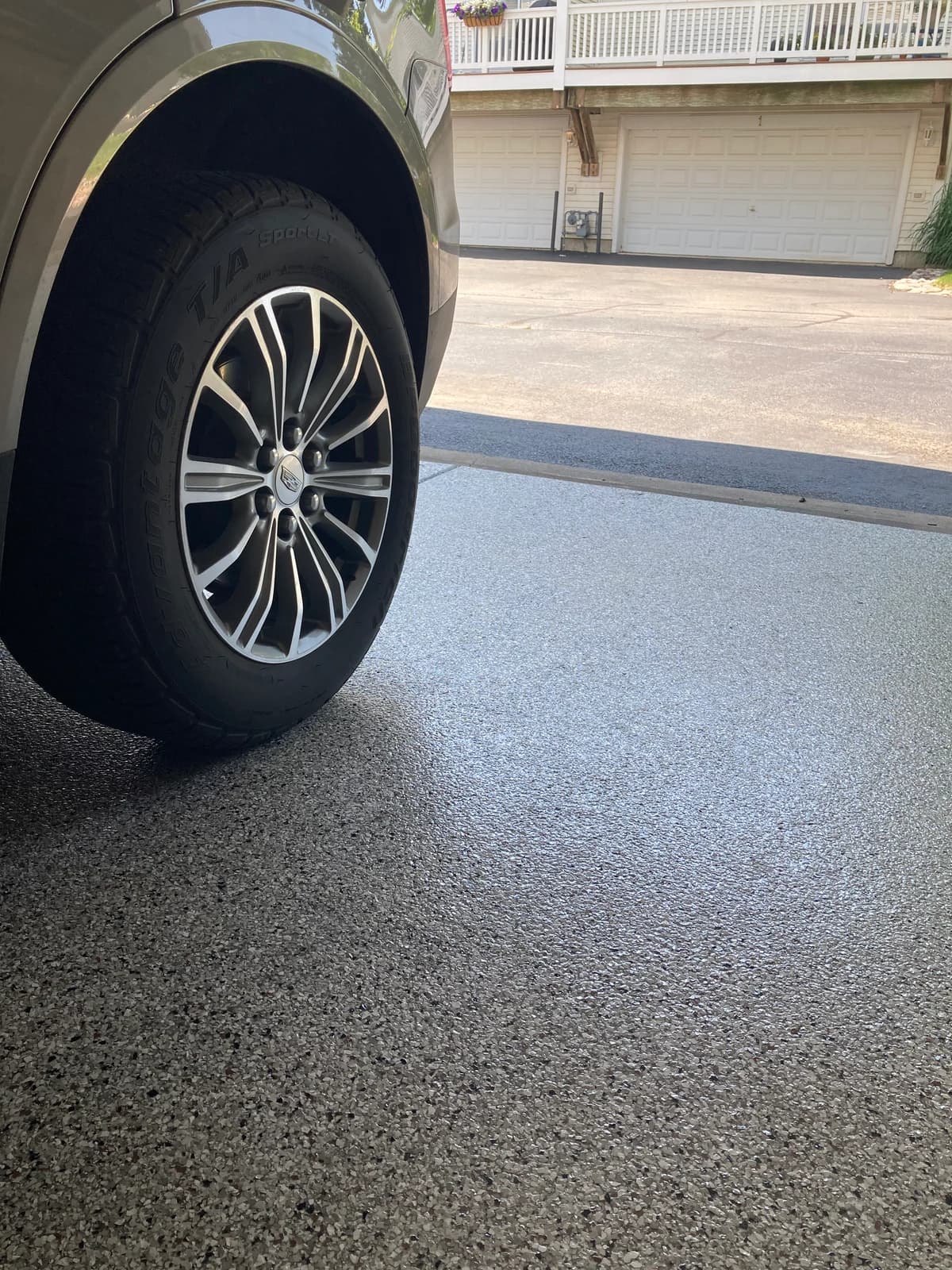
Hot tire pickup is what happens when tires come home hot from the road, the car parks on a coating that softens with heat, the tread grips it, and patches of coating leave with the tire when the car backs out. It shows on the two strips where the tires sit, as bare or torn patches that line up with the wheels. It is a common way epoxy fails in a garage. This page explains why it happens, the three other ways epoxy gives out, and what replacing the floor involves. If you are still choosing a coating, our polyaspartic vs epoxy comparison covers the whole decision.
- ways epoxy gives out in a garage, on this page
- 4
- to install the new system, once the old coating is off
- 1 day
- until you park on it again
- 72 hrs
- assessment of your old floor
- Free
Hot tire pickup, step by step
Park a warm car, then back it out
Press Drive home and park. The tires are warm from the road.
Simplified. The coating softens under a hot tire, the tread grips it, and it leaves with the car. Our polyaspartic topcoat is hard and, installed properly, resists it.
02The cause
Why it happens to epoxy
Epoxy hot tire pickup starts with heat. Epoxy has lower heat resistance than our topcoat, and a tire that has just come off hot pavement can soften it enough for the tread to grab hold, and when the car moves, the softened coating goes with it. Prep makes it worse. An epoxy floor rolled onto concrete that was never ground open has little holding it down to begin with, so it lets go sooner.
Our system is built the other way around. The top layer is a hard polyaspartic that takes the heat and the wear. Under it sits a polyurea base that held at more than 400 psi in the ASTM D4541 pull-off test reported on the product data sheet, where the concrete broke before the bond did. For how that base compares with an epoxy film, read polyurea vs epoxy.
The exact claim we make is that our system resists hot tire pickup when installed properly. Those last three words matter, because the base can only grip concrete that has been ground and cleaned.
03Failure two
Epoxy garage floor peeling that has nothing to do with tires
Not all epoxy garage floor peeling comes from tires. Peeling that starts at the edges or at the door, or that comes up in whole sheets, usually points back to prep. A coating rolled onto concrete that was never ground open has little to hold, and water, salt and traffic work it loose from the edges in.
DIY epoxy kits are prone to it, since the prep is left to whoever bought the kit. It is also why we treat prep as part of the floor and not a chore before it. Every one of our installs starts with diamond grinding, which opens the surface so the base has something to bond to.
From our job files
What peeling looks like on a real floor
Two garage floors our crew removed: one coming up at the door, one along a joint in the slab.
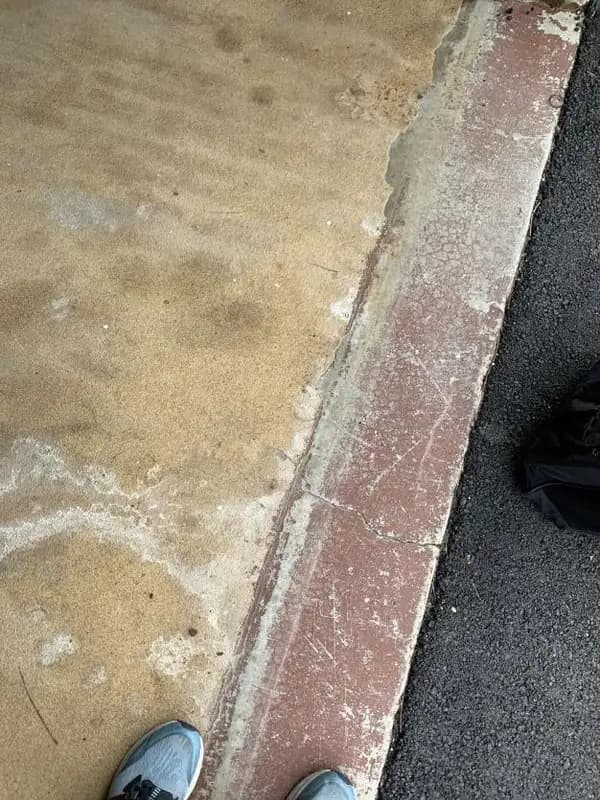 1At the door
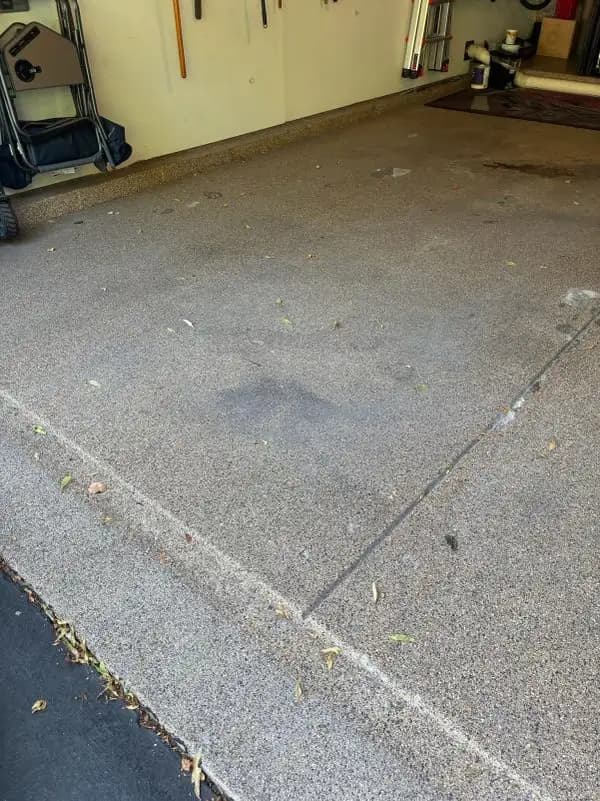 2Along the joint
04Failure three
Why does epoxy yellow?
Many epoxies amber under UV light. It shows first on the strip inside the garage door, where the sun reaches whenever the door is up, so the floor ends up two colors: yellowed near the door and closer to its original color further in. That is epoxy floor yellowing, the third of the four failures on this page.
Illustration only. The sun reaches the strip inside the door first, so that is where ambering shows.
Does polyaspartic yellow? No. Our polyaspartic topcoat is formulated to stay UV stable, so it keeps its color and gloss on that same strip.
05Failure four
Chipping, and why every chip spreads
Epoxy cures hard and brittle. Drop a wrench or a trailer jack on it and the film can chip, and every chip is a new edge for water and salt to get under, so one chip becomes the start of the next.
Our system answers it with hardness from the top and flexibility from the base: the top resists the hit, and the base has give when the slab moves. If your chips line up along a crack, freeze-thaw movement is part of the story, and our comparison explains how a rigid film handles a Midwest winter.
All four at a glance. Tap what your floor is doing.
What is your floor doing? Tap one.
Failure 01
Yellowing and ambering
Many epoxies amber under UV light. It shows first on the strip of floor inside the garage door where the sun reaches, so the floor ends up two colors.
What our system does
Our polyaspartic topcoat is UV stable. It keeps its color and gloss where sunlight hits the floor.
Failure 02
Hot tire pickup
Tires come home hot. Park on a coating that softens with heat and it grips the tread, and when the car backs out, patches of coating leave with the tire.
What our system does
Installed properly, our system resists hot tire pickup. The hard polyaspartic top takes the heat and the wear.
Failure 03
Peeling and delamination
Most peeling starts with prep. A coating rolled onto concrete that was never ground open has little to hold, and water, salt and traffic work it loose. DIY epoxy kits are prone to it, since the prep is left to whoever bought the kit.
What our system does
We diamond grind every slab first. In the ASTM D4541 pull-off test on the product data sheet, our basecoat held at more than 400 psi, and the concrete broke before the bond did.
Failure 04
Chipping from impact
Epoxy cures hard and brittle. Drop a wrench or a trailer jack on it and the film can chip, and every chip is a new edge for water and salt to get under.
What our system does
Our system handles dropped tools and heavy equipment: flexibility from the base, hardness from the top.
Epoxy floor peeling, lifting or yellowing?
Call us or request a quote and tell us what the floor is doing. We will look at it during the free assessment and tell you whether it needs a recoat or a full replacement.
06The question everyone asks
Recoat or replace?
Hot tire pickup is often localized to the strips where the tires sit, but it usually points to prep that was skipped under the whole coating. So our answer depends on the condition of the existing coating, and in most cases we remove the old coating so the new system bonds to prepared concrete.
At the free assessment we look at how much of the coating has lifted, whether the concrete under it is sound, and whether the old coating is still bonded anywhere at all. We will not promise you an answer before we have seen the floor, and neither will the checklist below. What it will do is tell you what your symptoms usually mean.
Removal adds grinding time, so a replacement tends to land toward the upper end of our usual $6 to $10 per square foot range, and almost never past it. We tell you if your floor needs it before we quote, and our page on polyaspartic floor coating cost goes through the rest of the pricing. If the floor does need replacing, our ranking of the best garage floor coating to replace it with explains why the next floor should not be another epoxy.
Your floor, four questions
Tap yes for anything your floor is doing
Is it lifting in patches under the tires?
That is usually hot tire pickup: the coating softened under warm tires and left with the tread.
Is it peeling at the edges or the door?
Peeling that starts at edges or the door usually points back to prep. The coating had little to hold on to.
Has it turned yellow or two-toned?
That is the coating ambering under UV light, usually worst on the strip inside the door where the sun reaches.
Are there chips along a crack?
Chips along a crack usually mean a rigid film that could not move when the slab did.
What happens next
0 of 4
signs you ticked
Nothing ticked yet. If your floor is doing something that is not on this list, tell us about it when you call.
Most floors with any of these need the old coating removed so the new system can bond to clean concrete. We confirm that on site, not from a checklist.
Not sure what you are looking at?
Text us a photo of the floor.
Send a picture of the spots that worry you to (815) 605-1351 and we will take a preliminary look before anyone comes out. If the floor needs a closer look, the in-person assessment is free.
07What the fix looks like
What replacing the floor involves
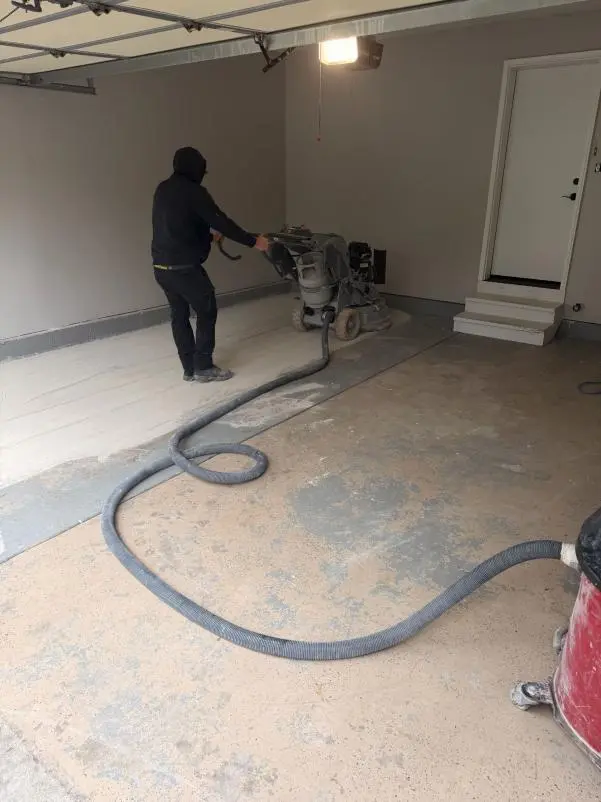
Replacing a failed epoxy floor follows the same sequence as any of our installs, with the removal added at the start. The old coating comes off and the slab is diamond ground and vacuumed. The polyurea base goes down and the flake is broadcast into it until the surface is covered. Then the clear polyaspartic topcoat seals it.
Most installs take one day. If the old coating has to come off first, the crew tells you during the assessment how that changes the schedule. The floor then comes back in three steps, counted from when we finish:
- 24 hourswalk on it.
- 48 hoursmove small items back in, anything under 100 pounds.
- 72 hoursheavy items and vehicles. The floor is back in full use.
In winter the cure can take longer, and that does not harm the floor.
From our job files
Removal, on a real garage
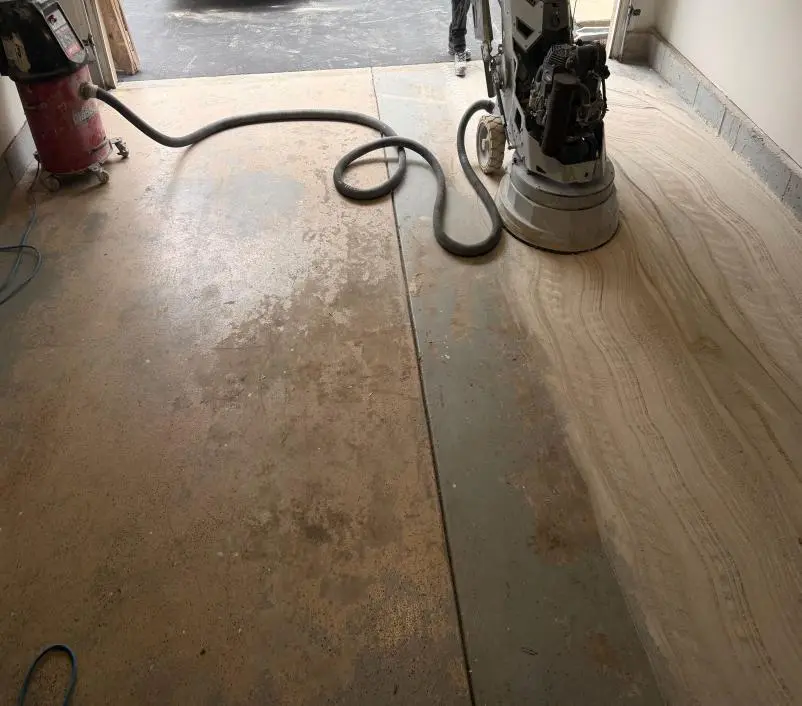 1Mid-removal
 2Grinding
Cure clock
Drag to see what you can do, and when
after we finish
Still curing
Stay off the floor. Cold weather can stretch this part, and the longer cure does not hurt anything.
Walk on it
Small items back
Vehicles and heavy items
The new floor resists hot tire pickup when installed properly, stays UV stable at the door and flexes with the slab. With proper maintenance, it can last a lifetime. Residential floors under a roof, garages included, carry a lifetime warranty, backed by The Integrity Seal. Patios, pool decks, porches, walkways, garage aprons and commercial floors carry a 3-year warranty with the same coverage. The lifetime warranty transfers to the next owner of the home.
For the full picture of the floor we put down, see our garage floor coatings. When you are ready, book a free floor assessment and we will look at the old floor and put the fix in writing.

About the author
Lukas Overhaug is an owner of Integrity Concrete Coatings, a family-owned company that has installed concrete floor coatings across Northern Illinois since 2018. He and the crew install the polyurea and polyaspartic system described on this page.
